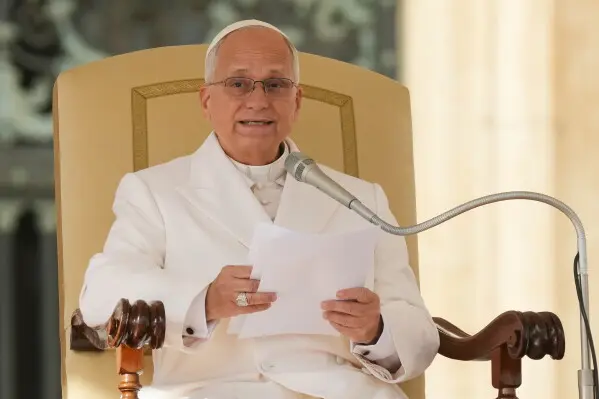
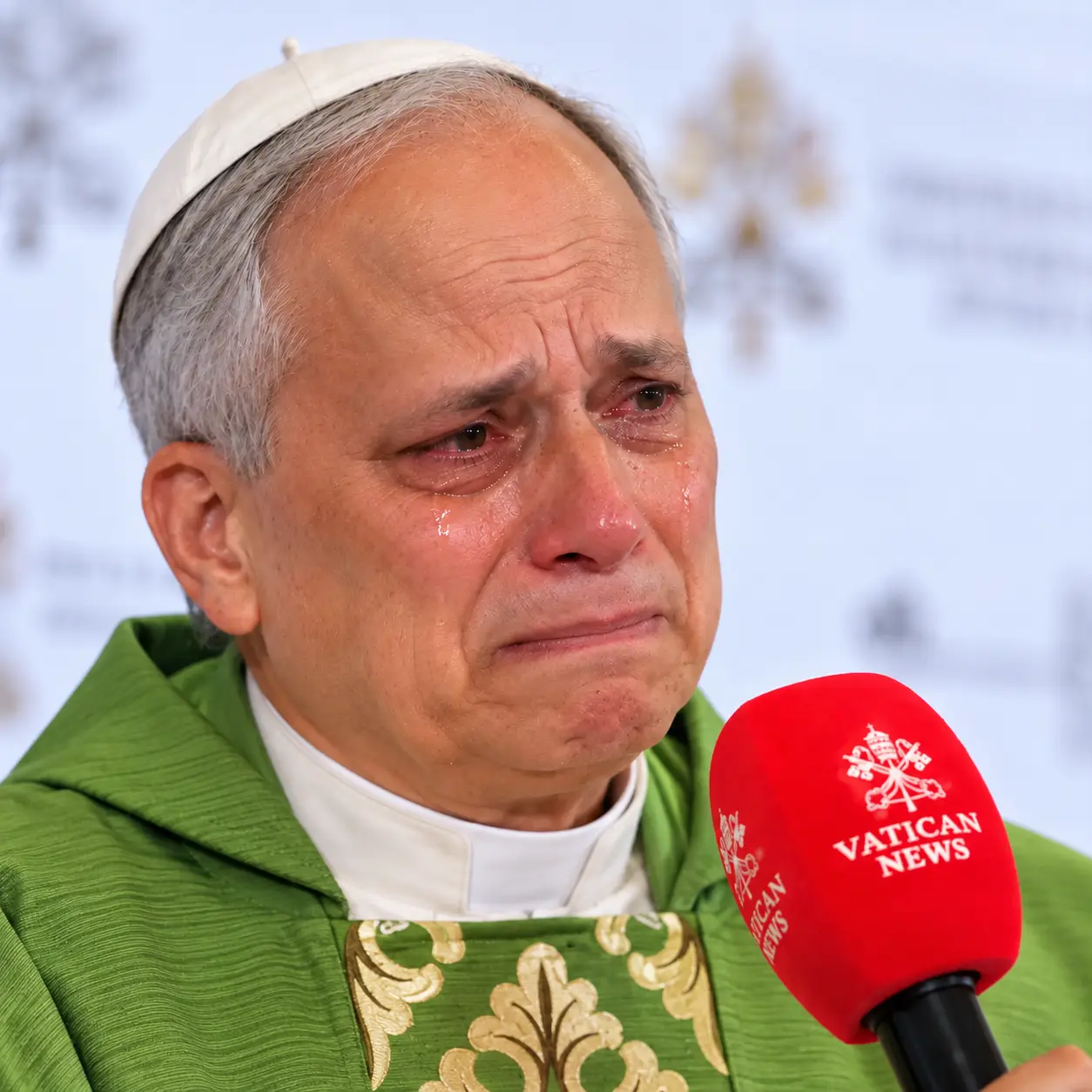
ROME, ITALY — A dramatic headline involving Pope Leo XIV has raised questions about a supposed announcement from the heart of the Catholic Church. But behind the urgent wording lies a mystery: What exactly has been confirmed, and why is the Vatican once again at the center of international attention?
The headline declares that Pope Leo XIV was officially confirmed as something significant just five minutes ago in Rome. However, it provides no details about the announcement, its source, or what the confirmation actually concerns.
There is currently no verified basis in the supplied information for claiming that a new announcement occurred five minutes ago.
Nevertheless, the attention surrounding the headline reflects the extraordinary significance of Pope Leo XIV's leadership and the worldwide interest in developments involving the Vatican.
For millions of Catholics, news concerning the pontiff carries spiritual, emotional, and historical importance.
Whether the subject involves Church leadership, an upcoming religious ceremony, international diplomacy, or the Pope's public ministry, announcements from Rome can quickly become matters of global interest.
A Pope Whose Leadership Has Captured Worldwide Attention

His election marked a historic milestone, making him the first pope born in the United States.
The moment introduced a new chapter in the Church's history and placed an internationally experienced religious leader at the center of one of the world's most influential institutions.
Before becoming pope, Prevost served extensively in Peru and held important leadership responsibilities within the Catholic Church.
His background combined missionary experience, pastoral work, and service within the Vatican.
That experience helped shape the public expectations surrounding his pontificate.
From the beginning, attention focused on how he would approach issues such as peace, social justice, the Church's internal challenges, and its relationship with a rapidly changing world.
For Catholics and observers alike, every significant papal statement offers an opportunity to better understand the direction of his leadership.
Why News From Rome Carries Such Enormous Weight
Rome is more than the geographical setting of papal announcements.
It is the historic center of the Catholic Church, with Vatican City serving as the sovereign headquarters of the Holy See.
From St. Peter's Square to the Apostolic Palace, the Vatican has witnessed centuries of religious ceremonies, leadership transitions, and major historical decisions.
An official announcement involving the Pope can concern many different subjects.
It might involve the appointment of Church leaders, plans for international travel, a message addressing global events, or a decision affecting Catholic institutions.
Because the Pope is both a religious leader and an internationally recognized public figure, his words often attract attention far beyond the Catholic community.
That influence makes accurate reporting especially important.
A headline suggesting that something has been officially confirmed must identify what the confirmation actually means.
Without those details, readers are left with suspense rather than information.
The Official Development: Pope Leo XIV Hospitalized in Rome
There is, however, a significant confirmed development involving Pope Leo XIV on October 13.
According to Vatican News, Reuters, and the Associated Press, the 71-year-old pontiff was admitted to Rome's Gemelli Hospital for surgery to remove a small, localized nodule from his lung. The condition was discovered during routine medical examinations, and the Pope had publicly discussed the planned procedure on October 11.

The Vatican indicated that the nodule was detected early and that doctors recommended its removal.
The precise nature of the growth has not yet been established publicly. Further medical evaluation is expected to determine whether additional treatment is necessary.
Importantly, the available reports do not establish a cancer diagnosis.
The Pope's public engagements have been canceled through October 20, allowing time for surgery and recovery.
This is the genuine, documented development behind today's concern surrounding the Vatican.
An Unexpected Change to the Vatican's Schedule
The hospitalization has affected several important religious events.
Pope Leo XIV had been expected to participate in activities marking the tenth anniversary of Amoris Laetitia, the apostolic exhortation issued by Pope Francis concerning family life.
The gathering brought together Church leaders, representatives of episcopal conferences, married couples, and experts to discuss the Church's pastoral work with families.
Because of the planned operation, Pope Leo XIV will no longer preside at the October 14 Mass in St. Peter's Square.
Cardinal Luis Antonio Tagle has been entrusted with leading the celebration instead.
The Pope also requested that the gathering's concluding report be held until he could review its findings and offer his reflections.
That decision demonstrates the continued importance of the meeting to his pontificate, even as his immediate attention turns toward recovery.
Messages of Concern and Support
The Vatican has reported receiving messages of support from religious communities and political leaders around the world.
For many Catholics, news of the Pope's hospitalization carries a personal emotional significance.
The pontiff is not simply the head of an international institution. He is also a spiritual figure whose public ministry is followed by millions.
His absence from scheduled ceremonies will be noticeable, particularly among those who had expected to attend events in Rome.
At the same time, the Vatican has emphasized the planned nature of the procedure and the expectation of a recovery period lasting approximately one week.
There is no confirmed announcement that Pope Leo XIV has resigned, transferred his authority, or permanently withdrawn from public ministry.
What Happens to the Church During His Recovery?
The hospitalization has also raised questions about the administration of the Catholic Church while the Pope undergoes medical treatment.
The Vatican's regular administrative work can continue through existing officials and institutions.
Cardinal Pietro Parolin, the Vatican secretary of state, remains an important figure in managing ongoing affairs.
However, papal authority is not automatically transferred to another person simply because the Pope is hospitalized or temporarily unable to perform his duties.
Under Catholic canon law, the pontiff remains in office unless he dies or freely resigns.
The current medical situation therefore does not create a vacancy in the papacy.
A Moment of Uncertainty, but Also Hope
The coming days will be important as doctors evaluate the outcome of the procedure and the Pope begins his recovery.
Medical experts note that lung nodules can have different causes, including noncancerous conditions. The presence of a nodule alone does not establish a malignant disease.
The Vatican's description of the growth as small, localized, and detected early provides useful medical context, although it does not replace the findings of a formal examination.
The most reliable updates will come from the Holy See Press Office and the medical information it authorizes for release.
For now, the Church continues its work while its leader receives treatment.
The Announcement That Truly Matters
The original headline promised a mysterious confirmation from Rome five minutes earlier.
The verified story is more specific and more meaningful.
Pope Leo XIV has been admitted to Gemelli Hospital for a planned lung procedure, his public schedule has been temporarily suspended, and the Vatican expects a recovery period of approximately one week.
No confirmed information establishes that he has received a new title, stepped down as Pope, or experienced another undisclosed major event.
For Catholics around the world, the immediate focus is his recovery and the medical updates expected in the days ahead.
The news from Rome is significant enough without exaggeration.
And as the Vatican awaits further information, many faithful will be united by a simple hope: that Pope Leo XIV recovers successfully and is able to resume his ministry.
The world is watching Rome—not because of an unexplained viral headline, but because the health of the leader of the Catholic Church is now the subject of an important, officially confirmed medical development.
Sources: Vatican News, Reuters, and Associated Press, October 12–13, 2026. The phrase “5 minutes ago” has not been independently verified.
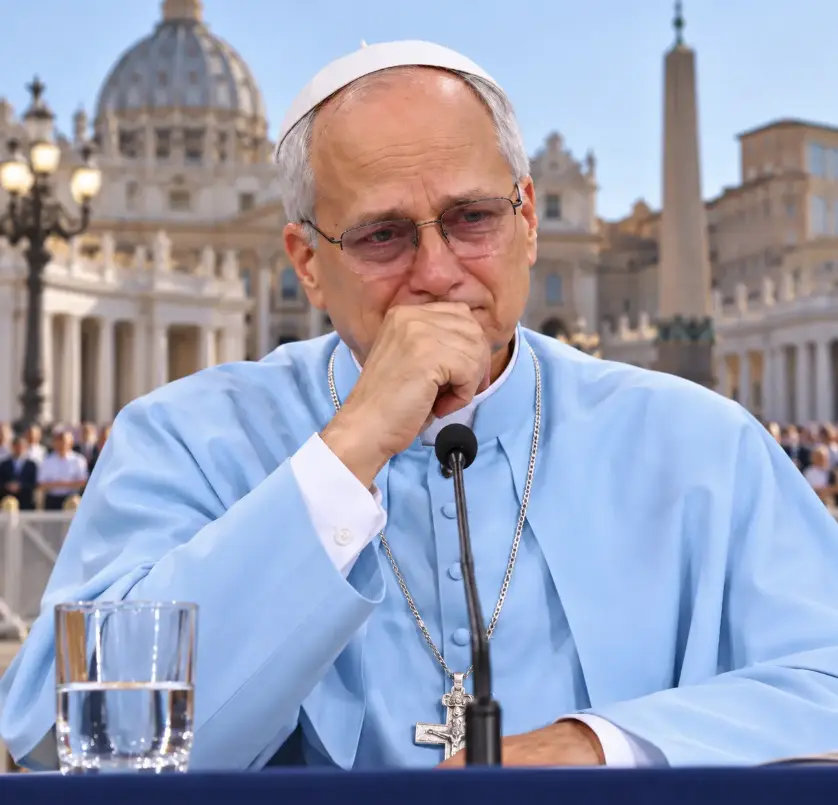
VATICAN CITY — FICTIONAL ENTERTAINMENT FEATURE
A profound silence falls over Vatican City in this imagined account as Pope Leo XIV delivers one of the most emotional messages of his spiritual journey. Standing before a gathering of clergy, religious representatives, and journalists, the pontiff appears visibly moved as he reflects on the pain, responsibility, and quiet sacrifices that accompany a life devoted to serving others.
What begins as a solemn address soon becomes something far more personal.
His voice softens. His expression grows serious. For several moments, he pauses as though searching for words capable of expressing feelings that have remained unspoken.
In this fictional scene, the man entrusted with guiding millions of Catholics reveals a deeply human truth: spiritual leadership does not make anyone immune to sorrow.
The imagined confession is not about a secret scandal or a previously undisclosed tragedy. Instead, it concerns the emotional weight of witnessing suffering, carrying the expectations of countless believers, and confronting the painful reality that even the strongest faith cannot immediately remove every human hardship.
For those listening, the message is unforgettable.
And at the center of it all stands Pope Leo XIV — not simply as the leader of the Catholic Church, but as a man whose compassion has become inseparable from the burdens of his calling.
A Moment of Silence Inside the Vatican
The fictional scene unfolds in a quiet Vatican hall illuminated by soft afternoon sunlight.
Religious leaders sit attentively while journalists prepare to document what they expect will be a traditional papal reflection.
Pope Leo XIV approaches the podium wearing his familiar white cassock.
At first, his expression is composed.
He begins speaking about the importance of faith, unity, and compassion in a world increasingly affected by conflict and uncertainty.
But as the imagined address continues, something changes.
His words become more personal.
He reflects on the countless stories of suffering that reach spiritual leaders every day — families separated by war, parents struggling to protect their children, elderly people facing loneliness, and individuals searching desperately for hope.
Then he pauses.
For several seconds, the hall remains completely silent.
In this fictional portrayal, the pontiff lowers his gaze before acknowledging that some stories of human suffering remain in his thoughts long after public ceremonies have ended.
The room grows still.

What follows is not a formal declaration about Church policy.
It is an imagined expression of vulnerability from a man whose responsibilities extend across the world.
The Pain That Cannot Always Be Seen
Throughout the fictional address, Pope Leo XIV reflects on the difference between public strength and private emotion.
To millions of Catholics, the pope represents spiritual reassurance.
His presence at religious ceremonies symbolizes continuity, faith, and hope.
His blessings bring comfort to believers facing difficult circumstances.
Yet the imagined confession reveals that those who provide comfort may also experience emotional exhaustion.
The fictional pontiff describes the difficulty of hearing about suffering without being able to resolve every tragedy.
He considers the anguish of parents who have lost children, communities devastated by violence, and families struggling with poverty.
Each story carries its own emotional weight.
And together, they form a burden that cannot simply be set aside.
In this imagined moment, Pope Leo XIV recognizes that compassion sometimes requires the courage to remain emotionally present even when circumstances are heartbreaking.
His message challenges the assumption that strength means never showing sadness.
Instead, the fictional reflection suggests that genuine strength may involve acknowledging pain while refusing to surrender hope.
An Emotional Confession That Changes the Atmosphere
As the imagined speech continues, the atmosphere inside the hall becomes increasingly solemn.
The pope speaks about the responsibility of offering hope to people who feel abandoned.
He reflects on the difficulty of finding reassuring words when families face circumstances that seem impossible to understand.
At one point, his voice trembles slightly.
He pauses and places both hands on the podium.
The audience waits in silence.
In this fictional scene, the pontiff explains that some of the most difficult moments in spiritual leadership occur not before large crowds, but during private encounters with people experiencing profound grief.
A grieving mother searching for meaning.
A frightened child hoping for safety.
An elderly person longing for companionship.
These imagined encounters become symbols of the suffering that religious leaders are called to recognize.
The pontiff does not present himself as someone capable of solving every problem.
Instead, he acknowledges the limitations of human power and the importance of remaining compassionate despite those limitations.
The emotional significance of the fictional confession lies in its humility.
It portrays spiritual leadership not as freedom from suffering, but as a willingness to accompany others through it.
The Human Being Behind the White Cassock
The papacy is surrounded by centuries of tradition.
Its ceremonies, historic buildings, and religious responsibilities create an image of extraordinary authority.
Yet behind these symbols stands a person.
A person with memories, emotions, and personal limitations.
In this imagined account, Pope Leo XIV becomes a reminder that spiritual leadership is deeply human.
He is portrayed reflecting on moments when words seem inadequate and silence becomes the only appropriate response.
He considers the importance of prayer when certainty is impossible.
And he acknowledges that even those who spend their lives encouraging others may sometimes need encouragement themselves.
The fictional message resonates because it challenges the idea that vulnerability is incompatible with leadership.
A spiritual leader can be compassionate without possessing every answer.
He can remain faithful while recognizing the existence of sorrow.
And he can inspire others while admitting that some experiences are emotionally overwhelming.
These reflections form the emotional heart of the imagined confession.
A Wave of Compassion Across the Catholic World
Within the fictional narrative, the pope's words inspire expressions of solidarity among Catholic communities around the globe.
In Rome, worshippers gather quietly in churches, lighting candles and offering prayers.
In the Philippines, families reflect on the importance of supporting those who dedicate their lives to religious service.
Across Latin America, parish communities share messages emphasizing compassion and spiritual perseverance.
In the United States, believers discuss the emotional demands placed on religious leaders.
These reactions are imagined, not accounts of verified gatherings or public statements.
Nevertheless, they illustrate how a message about vulnerability could resonate across cultural and geographic boundaries.
The fictional response is not driven by sensationalism.
It is rooted in empathy.
People recognize that the responsibilities of spiritual leadership can be enormous.
They understand that public figures, regardless of their positions, remain human beings.
And they are reminded that compassion should extend to those who are usually expected to provide it.
When Prayer Becomes a Source of Strength
One of the most moving passages in the imagined story occurs after the public address.
The fictional Pope Leo XIV withdraws to a small chapel inside the Vatican.
The atmosphere is peaceful.
Candles illuminate the altar.
The distant sounds of Vatican activity fade into the background.
For a few moments, the pontiff sits quietly in prayer.
There are no reporters, microphones, or public ceremonies.
Only silence.
In this fictional scene, he reflects on the people whose stories have affected him and the responsibilities that await him.
The chapel becomes a symbol of the spiritual refuge that prayer can provide.
Not because prayer automatically eliminates suffering, but because it creates space for reflection, humility, and renewed strength.
The imagined moment suggests that faith is not always expressed through powerful speeches.
Sometimes it is found in the quiet determination to continue serving others despite uncertainty.
Sometimes it appears in the willingness to listen.
And sometimes it is present in a simple prayer offered for someone whose pain cannot be taken away.
A Message for Those Carrying Silent Pain
The fictional confession extends beyond the Catholic Church.
Its central message speaks to anyone who has experienced emotional difficulty while feeling obligated to remain strong for others.
Parents who hide their worries to protect their children.
Caregivers who continue helping others despite exhaustion.
Teachers who encourage struggling students while facing personal challenges.
Community leaders who must make difficult decisions under pressure.
The imagined words of Pope Leo XIV remind these individuals that vulnerability does not diminish their dignity.
Pain does not erase courage.
And asking for support does not represent failure.
Within the narrative, the pontiff emphasizes the importance of building communities where people feel safe acknowledging their struggles.
He encourages compassion instead of judgment.
Patience instead of criticism.
And understanding instead of indifference.
The message is especially powerful because it does not promise that every hardship will disappear.
Instead, it suggests that suffering becomes easier to endure when people refuse to abandon one another.
The Responsibility of Faith in a Divided World
As the fictional story develops, Pope Leo XIV connects his personal reflections to a broader spiritual challenge.
He considers a world increasingly divided by political conflict, social tension, economic uncertainty, and distrust.
In such circumstances, religious communities can become important sources of comfort.
But the imagined pontiff argues that compassion must be demonstrated through action.
Faith should inspire people to feed the hungry, visit the lonely, comfort the grieving, and defend human dignity.
Religious devotion should not become separated from the needs of ordinary people.
The fictional message challenges believers to examine how they treat those around them.
Do they listen when someone is struggling?
Do they offer help without expecting recognition?
Do they respond to disagreement with hostility or patience?
These questions become part of the imagined pope's wider appeal for spiritual renewal.
The emotional confession therefore develops into something more than a personal reflection.
It becomes a call for collective responsibility.
A Final Moment That Leaves Everyone Silent
As the fictional address approaches its conclusion, Pope Leo XIV looks across the gathering.
His expression remains solemn, but his message gradually turns toward hope.
He reminds the imagined audience that human suffering should never be met with indifference.
Every person deserves dignity.
Every grieving family deserves compassion.
And every individual carrying silent pain deserves to know that they are not alone.
For a final moment, he pauses.
The room remains silent.
Then the pontiff steps away from the podium.
In this imagined scene, several members of the audience lower their heads in prayer.
Others remain seated, reflecting on the emotional significance of what they have heard.
There is no dramatic celebration.
No sensational revelation.
Only a quiet recognition that spiritual strength and human vulnerability can exist together.
Beyond the Tears, a Message of Hope
The fictional confession of Pope Leo XIV ultimately offers a message that extends far beyond Vatican City.
It reminds readers that even those who appear strongest may carry invisible burdens.
That leadership requires compassion as well as courage.
And that faith is not the absence of pain, but the determination to continue seeking hope in the midst of it.
The imagined pontiff's emotional reflections become a symbol of something deeply universal.
Behind every spiritual leader is a human heart.
Behind every public blessing may be a private moment of reflection.
And behind every person who offers comfort to others is someone who may also need kindness.
For the imagined Catholic world, the lasting significance of the moment is not sorrow alone.
It is the possibility of turning sorrow into understanding.
Of transforming compassion into action.
And of remembering that no one, regardless of position or responsibility, should be expected to carry every burden alone.
Because sometimes the strongest expression of faith is not hiding the tears — but finding the courage to keep loving, serving, and believing through them.