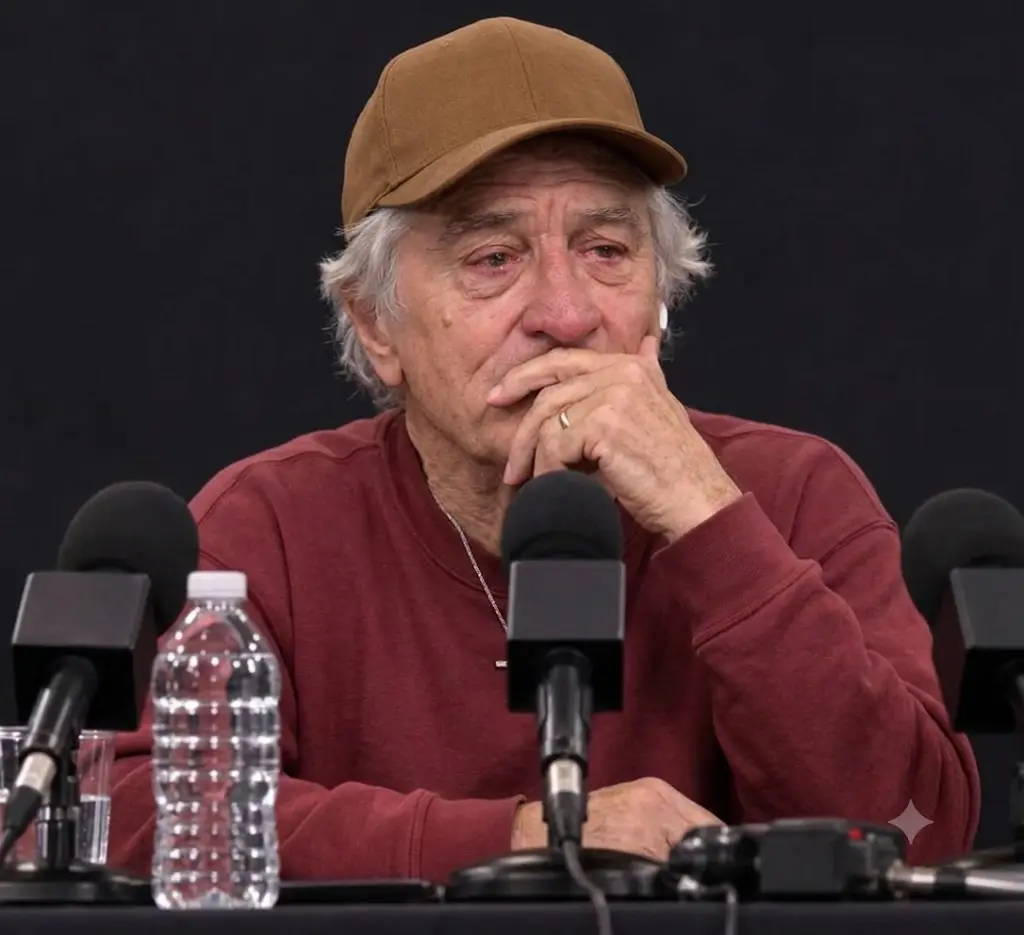
❤️🩹 “YOU MADE MY WORLD BETTER JUST BY BEING HERE” — ROBERT DE NIRO'S IMAGINED 9-WORD MESSAGE REVEALS THE POWER OF LOVE, FAMILY, AND THE BONDS THAT MATTER MORE THAN HOLLYWOOD FAME 💔🎬
For more than six decades, Robert De Niro has captivated audiences with performances that explore the deepest and most complicated sides of human emotion.
He has portrayed powerful men, troubled outsiders, devoted fathers, and unforgettable characters whose stories have become part of cinema history.
But imagine a moment when the legendary actor steps away from the Hollywood spotlight and expresses something deeply personal.
No movie cameras.
No elaborate production.
No awards ceremony.
Just a quiet conversation about someone who holds an important place in his heart.
In this fictional scenario, De Niro reflects on the meaning of family, companionship, and the people who make life's difficult moments easier to face.
Then he shares nine simple words:
“You made my world better just by being here.”
Nine words.
One heartfelt message.
And a reminder that the most meaningful expressions of love are not always complicated.
This quotation is an original fictional line, not an authenticated statement by Robert De Niro. The supplied teaser does not identify the person being addressed or provide a verified recording, interview, or source for an actual nine-word message.
Yet the imagined sentiment offers an opportunity to explore the real family relationships and personal experiences behind one of Hollywood's most celebrated careers.
THE MAN BEHIND THE LEGEND
Robert De Niro was born in New York City in 1943.
His parents were artists, and he grew up surrounded by creative influences.
From an early age, he developed an interest in acting.
He studied his craft seriously, gradually building the discipline and attention to detail that would become central to his professional identity.
His early performances attracted recognition for their intensity and authenticity.
But his rise to international fame required years of dedication.
He worked with directors who challenged him.
He explored demanding roles.
And he developed an approach to acting that emphasized psychological depth and believable characterization.
Eventually, his performances helped transform modern American cinema.
THE FILMS THAT MADE HIM UNFORGETTABLE
De Niro's portrayal of the young Vito Corleone in The Godfather Part II earned him an Academy Award for Best Supporting Actor.
His performance as Travis Bickle in Taxi Driver became one of the most recognizable portrayals in film history.
In Raging Bull, he delivered an extraordinary transformation as boxer Jake LaMotta, earning an Academy Award for Best Actor.
Later, Goodfellas, Casino, and The Irishman further demonstrated his ability to portray complicated characters.
He also embraced comedy.
Films such as Meet the Parents introduced his humor to audiences who primarily associated him with intense dramatic roles.
Across generations, De Niro continued exploring different sides of human behavior.
But outside the characters he portrayed, his personal life involved responsibilities and relationships that could never be captured through a film script.
THE FAMILY LIFE BEYOND THE CAMERAS
De Niro is a father of seven children.
Throughout his career, his family life has existed alongside the demanding schedules of film production.
In 2023, he welcomed his youngest daughter, Gia, with his partner, Tiffany Chen.
The arrival attracted widespread public interest.
For fans, it revealed another chapter in the life of a performer whose career had already spanned several generations.
But parenthood is not defined by celebrity status.
It involves ordinary responsibilities.
Providing encouragement.
Creating memories.
Offering reassurance.
And being present during important moments.
Those experiences can become meaningful regardless of a parent's professional accomplishments.
THE IMAGINED MOMENT THAT INSPIRED NINE WORDS
Picture a peaceful evening away from Hollywood's demanding schedule.
The atmosphere is quiet.
There are no reporters waiting for an interview.
No photographers capturing a public appearance.
And no audience expecting a performance.
In this fictional scene, De Niro sits beside someone he loves.
He reflects on the years that have passed.
The professional achievements.
The difficult decisions.
The people who offered support.
And the relationships that gave his life meaning beyond acting.
For a moment, he struggles to express everything he wants to say.
Then he smiles.
“You made my world better just by being here.”
The imagined message does not refer to a newly confirmed tragedy or illness.
It is simply an expression of gratitude.
And sometimes gratitude can be more moving than an elaborate speech.
WHY NINE WORDS CAN CARRY SO MUCH MEANING
Emotional messages do not have to be long.
A simple sentence can express affection, appreciation, or reassurance.
Its meaning often comes from the relationship between the people involved.
For someone who has experienced years of professional pressure, a message of gratitude may reflect the importance of personal connection.
For a parent, it may express appreciation for a child.
For a partner, it may acknowledge companionship.
And for a close friend, it may recognize years of loyalty and support.
The fictional nine-word message is intentionally universal.
It could resonate with anyone who has experienced the comfort of being loved.
TIFFANY CHEN AND A NEW CHAPTER OF FAMILY LIFE
Tiffany Chen became more widely known to entertainment audiences through her relationship with De Niro.
Their daughter Gia's birth in 2023 marked an important milestone.
Chen has also spoken publicly about experiencing Bell's palsy after giving birth.
Her account brought attention to the difficulties that can accompany the postpartum period.
However, those publicly discussed historical experiences should not be interpreted as evidence of a current medical emergency.
The supplied teaser does not establish that De Niro's alleged nine-word statement concerned Chen's health or any other specific situation.
Their private family experiences deserve accurate and respectful treatment.
THE DIFFERENCE BETWEEN A HOLLYWOOD LEGEND AND A FATHER
De Niro's professional achievements are extraordinary.
He has worked with celebrated filmmakers.
He has portrayed unforgettable characters.
And his performances have influenced generations of actors.
But children do not experience their parents primarily through professional awards.
They experience them through everyday interactions.
A familiar voice.
A shared laugh.
A moment of encouragement.
Or the reassurance that someone will be there when needed.
Those experiences cannot be replaced by fame.
And they cannot be measured through box-office success.
For De Niro, whose career has been defined by complex portrayals of human relationships, family life represents a deeply personal dimension beyond the screen.
THE PEOPLE WHO HELPED SHAPE HIS JOURNEY
No major career develops entirely in isolation.
De Niro's work has involved important creative relationships.
His collaborations with Martin Scorsese produced several landmark films.
His performances also depended on the contributions of writers, cinematographers, editors, producers, and fellow actors.
These professional relationships helped shape his artistic legacy.
But personal relationships can provide a different kind of support.
They offer companionship beyond public recognition.
They create a sense of belonging.
And they remind people that their identity extends beyond professional achievement.
In the fictional story, the nine-word message represents appreciation for that kind of connection.
WHY FANS FIND HIS PERSONAL SIDE SO MOVING
Audiences have watched De Niro portray emotionally complicated characters for decades.
Many of his most memorable roles involve conflict, regret, ambition, and difficult family relationships.
But seeing a celebrated actor associated with tenderness and gratitude can create a different emotional response.
It reminds fans that performers have lives beyond their fictional characters.
They experience affection.
They maintain relationships.
And they encounter the ordinary responsibilities that shape human life.
The contrast between De Niro's intense screen persona and a gentle family-centered message makes the imagined scene especially compelling.
THE QUIET POWER OF GRATITUDE
Gratitude is one of the simplest ways people acknowledge meaningful relationships.
It does not require an expensive gift.
It does not depend on public recognition.
And it does not need an audience.
Sometimes, expressing appreciation means telling someone that their presence has made life better.
The fictional message captures that idea.
“You made my world better just by being here.”
The words are not dramatic because they describe an extraordinary event.
They are meaningful because they recognize the value of another person.
That recognition can matter deeply in families, friendships, and romantic relationships.
WHAT HOLLYWOOD SUCCESS CANNOT GUARANTEE
Professional achievement can create opportunities.
It can provide financial security.
It can bring international recognition.
But it cannot guarantee that every relationship will be easy.
It cannot prevent all disappointment.
And it cannot replace the need for emotional connection.
De Niro's career has brought him extraordinary recognition.
Yet the imagined nine-word message reflects something separate from those achievements.
The importance of being loved for who someone is rather than what they have accomplished.
That is a universal experience.
People in every profession can understand the desire to feel valued beyond their work.

THE MESSAGE THAT WOULD LEAVE FANS REFLECTING
As the fictional conversation approaches its conclusion, De Niro sits quietly.
There is no dramatic announcement.
No shocking revelation.
And no public confrontation.
Instead, the imagined scene ends with a simple expression of affection.
The person beside him smiles.
And the conversation continues away from the cameras.
The moment is fictional, but its emotional message is recognizable.
Life can be busy.
Responsibilities can become overwhelming.
And people sometimes forget to express appreciation for those closest to them.
A few sincere words can make a meaningful difference.
THE REAL LEGACY OF ROBERT DE NIRO
De Niro's place in cinema history is already firmly established.
His performances have shaped modern acting.
His collaborations have produced influential films.
And his dedication to storytelling has inspired generations of performers.
He also helped establish the Tribeca Film Festival, contributing to a platform for filmmakers and audiences.
But his public story extends beyond professional achievements.
He is also a father and a person with relationships that remain largely private.
Those personal connections deserve respect.
The supplied teaser does not establish that he recently delivered an emotional nine-word statement.
Nor does it identify the person supposedly addressed.
The quotation featured in this article is therefore presented as an imagined expression of gratitude rather than a documented event.
THE NINE WORDS THAT CAPTURE THE HEART OF THE STORY
“You made my world better just by being here.”
Nine words.
No elaborate promises.
No expensive gifts.
No Hollywood spotlight.
Just a message about the importance of another person's presence.
For fans, the imagined moment offers a reminder that even the most celebrated people have reasons to value ordinary human connection.
And for readers, it raises a simple question.
When was the last time you told someone how much they mean to you?
Sometimes, the most powerful message is not about success, fame, or achievement.
It is about gratitude.
❤️🩹 ROBERT DE NIRO FANS, WHO IS THE PERSON WHO HAS MADE YOUR LIFE BETTER JUST BY BEING THERE? SHARE A HEART AND CELEBRATE SOMEONE SPECIAL IN YOUR LIFE. ❤️🎬
#RobertDeNiro #HollywoodLegend #MovieFans #CinemaHistory #FamilyLove #EmotionalMoment #CelebrityNews #EntertainmentNews #HollywoodNews
DISCLAIMER: This article is a fictionalized entertainment feature inspired by the supplied teaser. The nine-word message, private conversation, emotional reactions, and surrounding scene are invented for storytelling purposes and are not verified statements by Robert De Niro. The supplied material does not identify an authenticated quotation or establish that De Niro recently made such an announcement. This article does not report a death, medical emergency, family tragedy, or other newly confirmed crisis. Publicly documented career and family information is included as background context. Readers should consult official statements and reputable news organizations for verified updates.
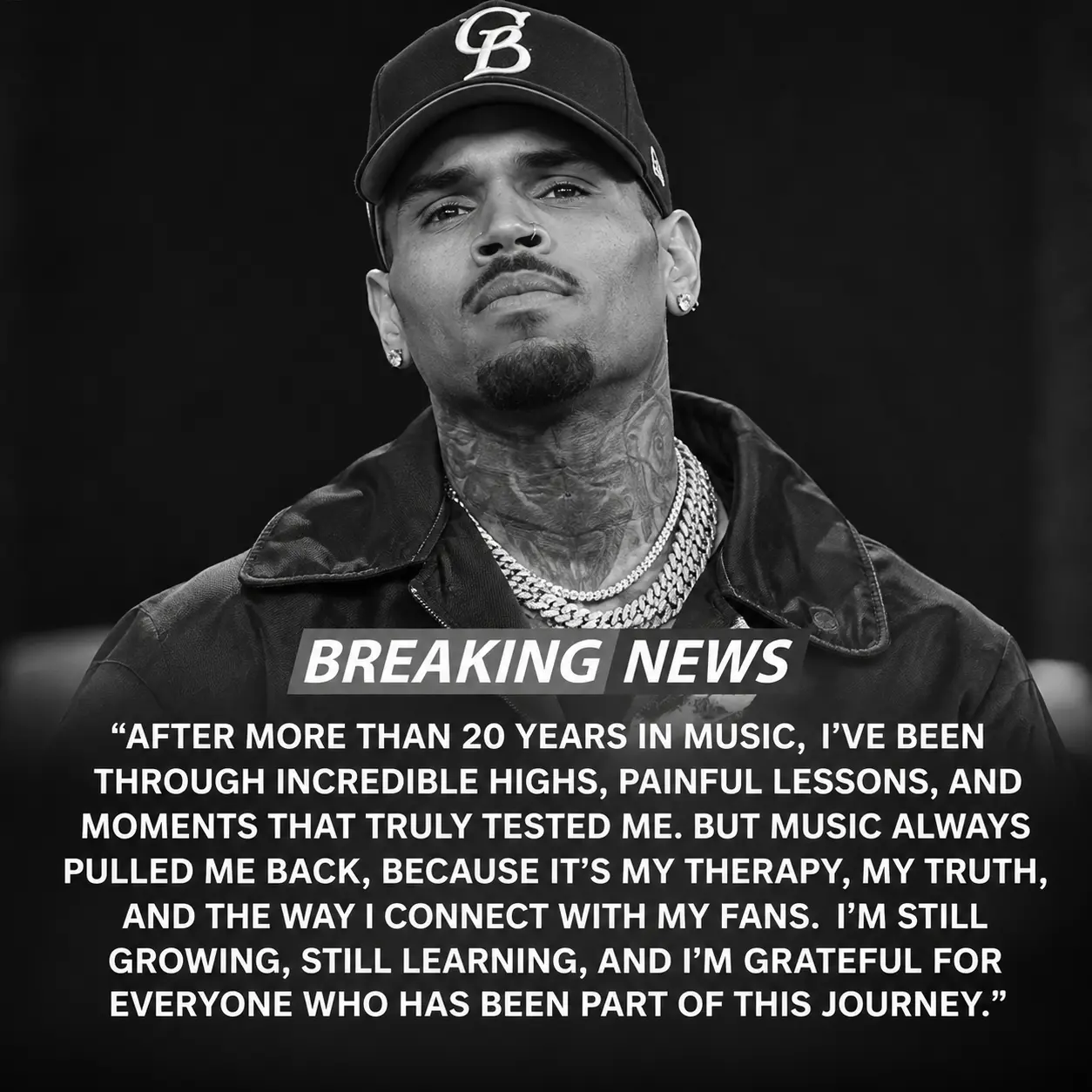
 Chris Brown performing in 2005 — Joel Telling / CC BY 2.0. Archival photograph; not evidence of the fictional statement.
 Chris Brown performing in 2012 — Eva Rinaldi / Wikimedia Commons. Archival photograph; not evidence of the fictional statement.
 Chris Brown on the 2024 11:11 tour — Wikimedia Commons. Archival photograph; not evidence of the fictional statement.