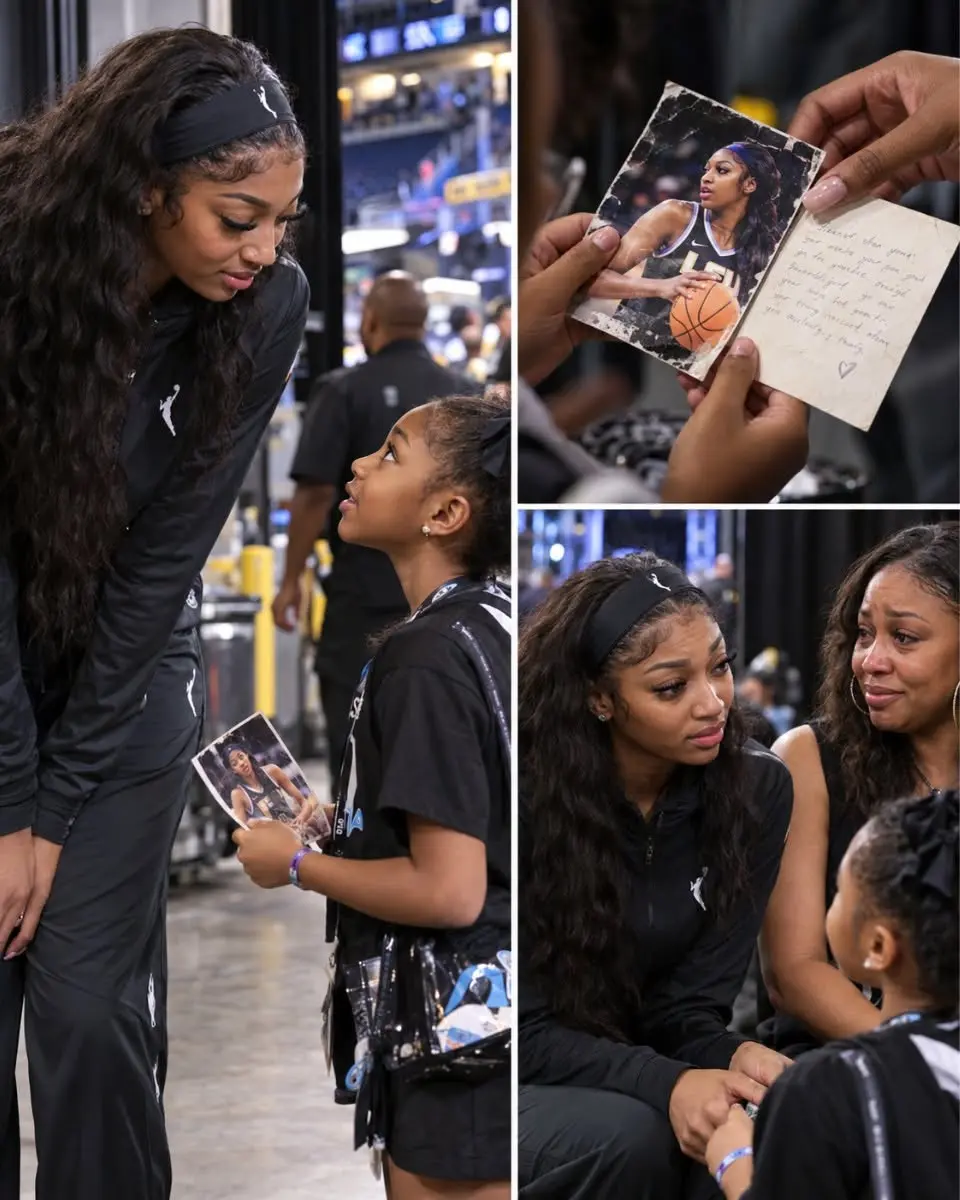
Sometimes the most powerful moment in sports has nothing to do with a final score, a packed arena, or a championship trophy raised beneath the brightest lights in the building.
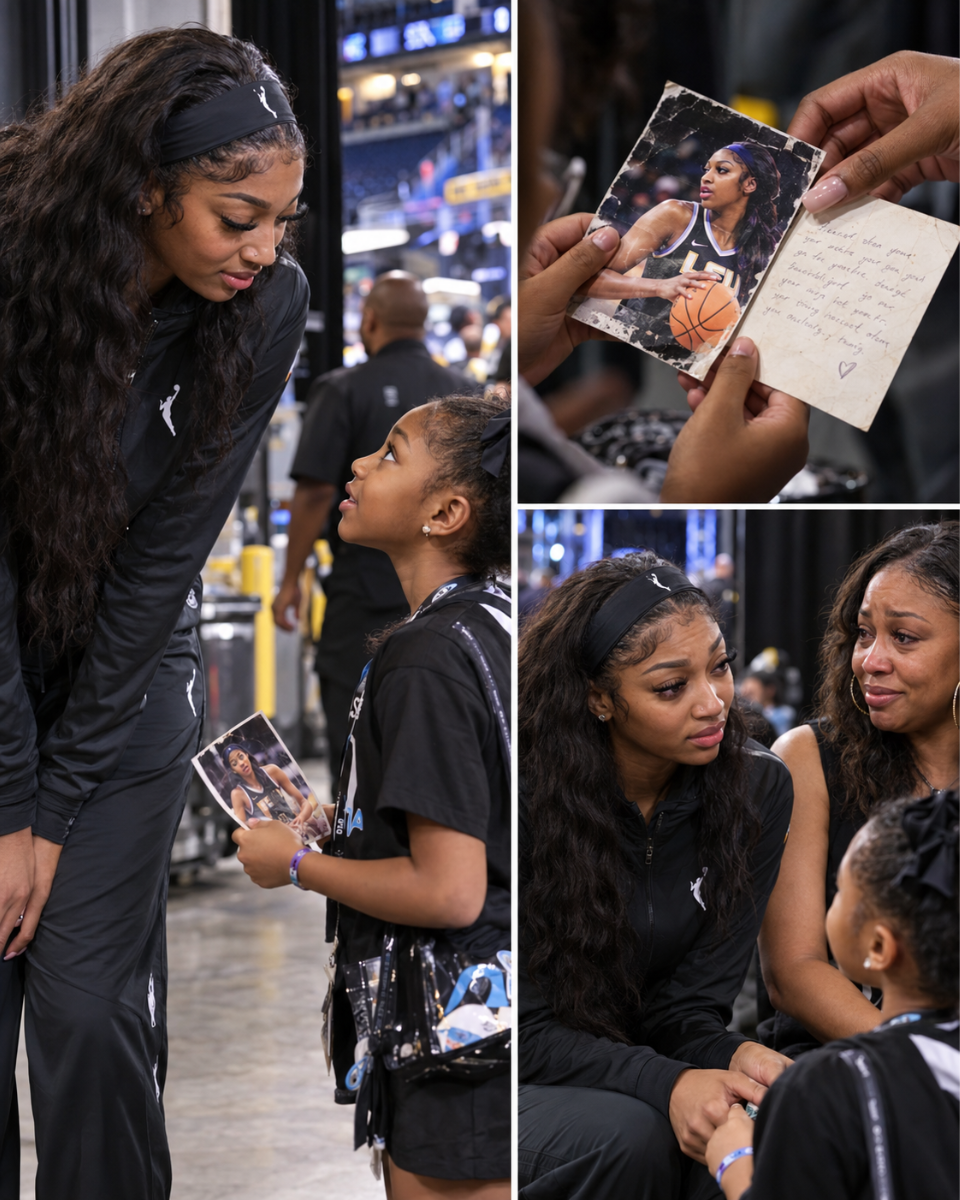
For Angel Reese, whose basketball journey has unfolded under extraordinary public attention, a circulating story about a young girl and an old photograph raises a quieter question about what athletes mean to families.
In that account, a child approaches Reese before a game carrying a photograph that her late grandfather once treasured, hoping the player will understand why an ordinary picture became something irreplaceable at home.
The story says a handwritten message appears on the reverse, and Reese asks to speak with the child's mother, but the message itself and the meeting have not been independently established.

That uncertainty matters, especially when an emotional story involving a deceased relative can travel across social media faster than anyone pauses to ask where its details originally came from or whether they happened.
Yet the reason such a story catches attention is easy to recognize: sports memories often survive long after the ticket stubs fade, the television broadcasts end, and the people who shared them are gone.
A grandmother may remember an impossible comeback, a father might recall teaching his children the rules, and a grandfather may preserve a photograph because it represents a precious moment shared across generations.
For many young fans, meeting an athlete is not simply a celebrity encounter; it can become a bridge between the dreams they are beginning to form and someone they desperately wish could witness them.

Reese understands the public power of those dreams from a career that began far from the professional spotlight, with determination and years of demanding practice shaping her identity as a basketball player.
Raised in Maryland, she played college basketball at Maryland before transferring to Louisiana State University, where her fierce competitiveness helped carry the Tigers toward an unforgettable national championship in 2023.
The victory made Reese a household name, but it also exposed her to criticism and scrutiny that frequently focused on her celebrations, confidence, and personality rather than only her performances on the floor.
Some spectators admired the unapologetic energy she brought to women's basketball, while others challenged the way she expressed herself, turning a young athlete into a subject of unusually heated cultural arguments.

That divided reaction creates an interesting contrast with the image of a child clutching an old photograph, because a fan's connection to a player rarely follows the categories used in online debates.
A young girl may see someone who refuses to shrink when criticized, while her family may remember a particular game, a shared afternoon, or the confidence that athlete inspired at home.
Reese has also made a public commitment to helping children beyond the court, establishing the Angel C. Reese Foundation to expand opportunities in sports, education, financial literacy, and community life.
Through its programs, the foundation has distributed school supplies and supported students and families, demonstrating that the responsibilities of a modern sports figure can extend well beyond professional competition.

At a Baltimore basketball camp, Reese encouraged children to follow their interests rather than assume they had to choose a single path, offering encouragement rooted in possibility instead of celebrity distance.
Those documented moments help explain why audiences might readily believe a touching account about a photograph, even though being consistent with someone's public values is not proof that a particular encounter occurred.
And the difference matters: admiration should not require invented dialogue, anonymous witnesses, or a dramatic surprise, because authentic acts of service already provide powerful reasons to appreciate an athlete's influence.
If a handwritten message really reached Reese before a game, its emotional weight would belong first to the family who carried it, not to strangers competing to create the most sensational version online.

The mother's perspective would matter just as much as the player's, because the photograph would represent a relationship that existed long before any audience became interested in the story.
That possibility invites a broader conversation about privacy, grief, and the way viral stories sometimes turn an intimate family memory into public entertainment before the people involved can choose how to share it.
There is also something revealing about the attention given to athletes when they appear compassionate, as though everyday kindness must come with a camera, an expensive gift, or a grand gesture to count.
But listening closely, remembering a name, or respecting a family's personal history can matter enormously without producing a headline, and these gestures do not become less meaningful when no one records them.

Reese's documented work with young people offers a more reliable measure of that impact, allowing fans to celebrate concrete support while remaining open to new firsthand evidence about individual encounters.
The unverified photograph story may ultimately be confirmed, corrected, or quietly forgotten, but the emotion behind its popularity reveals how deeply audiences want successful athletes to remember the people watching from below.
For young girls who see Reese competing with confidence, the lasting inspiration may be less about a perfect viral scene and more about seeing someone pursue ambition while continuing to invest in others.
Perhaps the question worth sharing is not what mysterious words appeared behind an old photograph, but whether we can honor real human connections without needing to transform every moving possibility into an unquestionable fact.